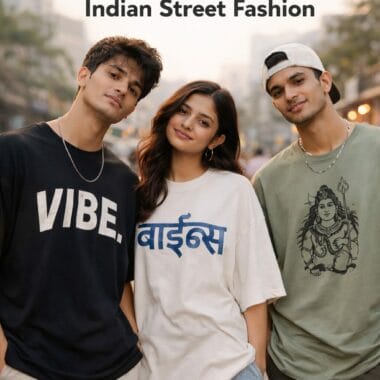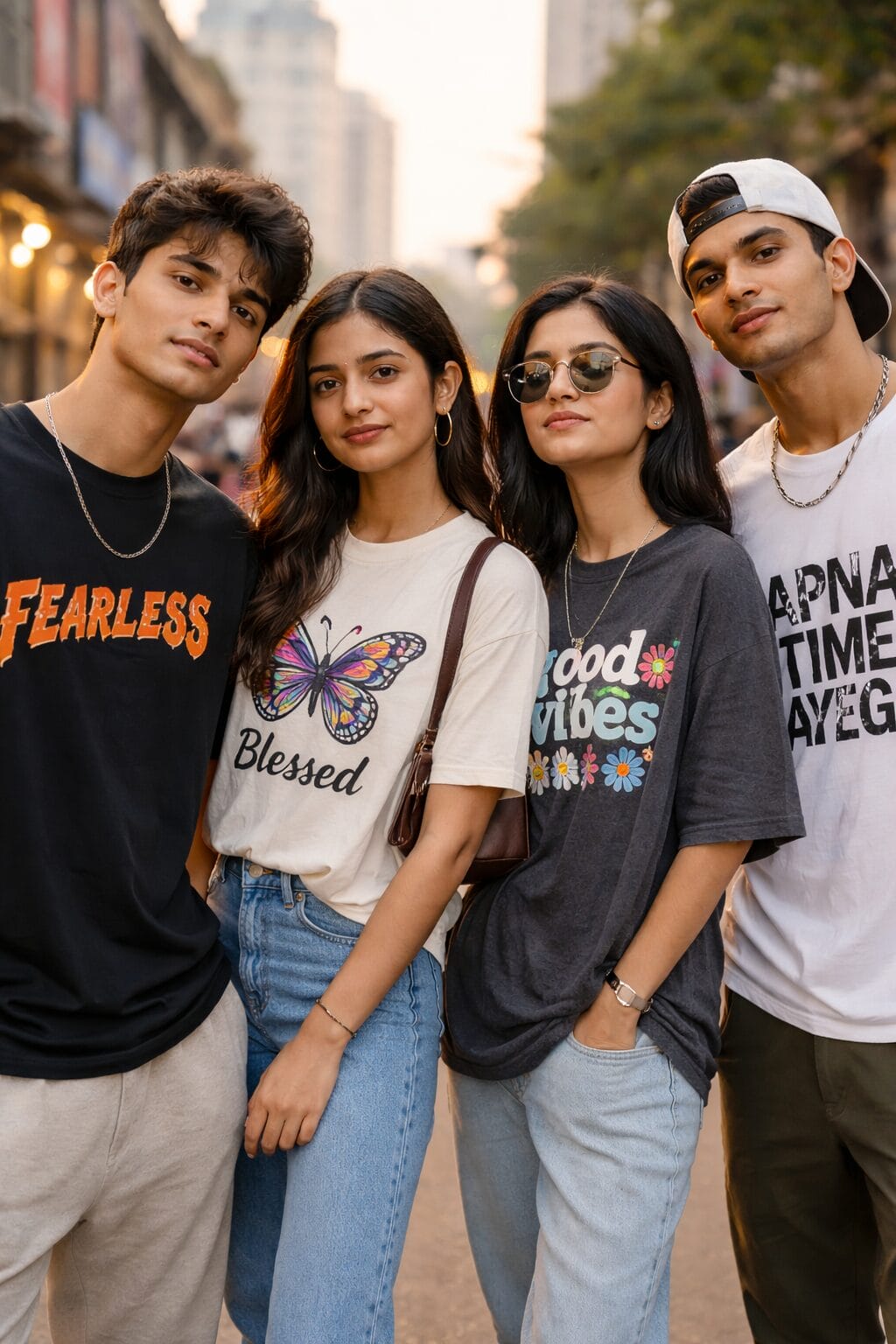
There was a time when a T-shirt was just a piece of clothing.
Something casual. Something simple. Something worn without much thought.
But for Indian Gen Z, a T-shirt is no longer silent.
In 2025, it speaks — softly or boldly — about beliefs, moods, culture, resistance, hope, humor, and identity. It carries words, symbols, languages, and emotions that often say what voices don’t.
What started on the streets has now reached the soul.
The Generation That Dresses With Meaning
Indian Gen Z grew up in a world of noise — social media opinions, cultural shifts, constant comparison, and rapid change. In that chaos, self-expression became essential.
This generation doesn’t dress to impress authority.
They dress to express authenticity.
T-shirts became the most natural medium for this expression because they are:
- Accessible
- Comfortable
- Honest
- Visible
A slogan tee can say what a caption cannot.
A graphic tee can show emotion without explanation.
A plain tee can signal calm, clarity, or minimalism.
For Gen Z, fashion is not about perfection — it’s about truth.
Streetwear Was the Beginning, Not the End
Indian streetwear didn’t start in luxury stores.
It started:
- In college corridors
- On buses and local trains
- In chai spots and night walks
- On Instagram stories and street corners
Streetwear allowed freedom — freedom from rigid fashion rules, gender expectations, and outdated norms.
Oversized tees, relaxed fits, bold prints, and raw typography became symbols of rebellion, comfort, and individuality.
But over time, something changed.
Streetwear stopped being just rebellion.
It became reflection.
When T-Shirts Started Carrying Emotion
Today’s Indian Gen Z tees are not just loud — many are deeply personal.
You’ll see:
- One-word tees that reflect inner states
- Regional language tees that express cultural pride
- Soft slogans that speak of mental health, growth, or peace
- Minimal designs that reject noise altogether
This shift marks a movement from street expression to soulful expression.
A T-shirt now answers questions like:
- “Who am I today?”
- “What do I stand for?”
- “What do I want the world to know — or not know?”




Language Tees: Culture as Identity, Not Costume
One of the most powerful changes in Indian Gen Z fashion is the rise of Indian language T-shirts.
Hindi, Tamil, Malayalam, Kannada, Bengali, Telugu — once seen as “regional” — are now worn proudly on the chest.
This is not nostalgia.
This is ownership.
Gen Z is reclaiming language as identity, not limitation.
A regional word on a tee says:
“This is where I come from — and I’m proud of it.”
It’s a quiet but confident statement that blends streetwear with cultural soul.
Minimalism as a Statement
Not every message needs words.
For many Indian Gen Z shoppers, plain T-shirts are the loudest expression of all.
Choosing minimalism today means:
- Rejecting excess
- Choosing calm over chaos
- Letting presence speak louder than print
A clean tee paired with confidence sends a powerful message:
“I don’t need to prove myself.”
In a world that demands constant visibility, minimal fashion becomes a form of resistance — and self-respect.
Why Online Shopping Fueled This Movement
Online shopping played a huge role in turning T-shirts into a voice.
Indian Gen Z shops differently:
- They read meanings, not just sizes
- They connect with stories, not just discounts
- They value vibe, not just visuals
Digital platforms allowed:
- Independent creators to express ideas
- Regional designs to reach national audiences
- Youth to curate wardrobes based on emotion, not trends
Shopping a tee online is no longer transactional.
It’s intentional.
Comfort Enabled Authenticity
There’s a reason T-shirts became the canvas for expression — comfort.
You cannot be authentic when you’re uncomfortable.
Soft fabrics, relaxed fits, breathable cotton — these elements allow freedom of movement and thought. When the body feels at ease, expression flows naturally.
Indian Gen Z values comfort not as laziness, but as self-awareness.
Comfortwear doesn’t distract.
It supports.
Fashion as Conversation, Not Validation
Unlike previous generations, Gen Z doesn’t dress for approval.
They dress for conversation — sometimes even for silence.
A T-shirt today can:
- Start a discussion
- Reflect a mindset
- Offer relatability to a stranger
- Signal boundaries
This emotional intelligence shows maturity beyond years.
Clothing is no longer about status.
It’s about connection.
The Rise of Soulful Streetwear Brands
Brands that understand Gen Z don’t sell just fabric — they sell feeling.
The most loved T-shirt brands today focus on:
- Honest design
- Cultural sensitivity
- Emotional relatability
- Everyday wearability
Youth don’t want fashion that talks down to them.
They want fashion that listens.
That’s where street meets soul — when clothing respects the wearer’s inner world.
From Trend to Personal Archive
Gen Z doesn’t just wear T-shirts.
They collect them — like memories.
Each tee represents:
- A phase
- A belief
- A moment in time
Years later, that old tee will still hold meaning — not because of the print, but because of who they were when they wore it.
That’s not fashion.
That’s personal history.
Final Thought
Indian Gen Z didn’t turn T-shirts into a voice overnight.
They did it by:
- Choosing honesty over hype
- Comfort over conformity
- Expression over excess
From the street to the soul, the journey of the T-shirt mirrors the journey of this generation — grounded, expressive, thoughtful, and unapologetically real.
And in that simplicity lies its power.